Pipeline, stages, notes
CRM
HubSpot remembers the deal. It does not remember the sentence you said on the call.
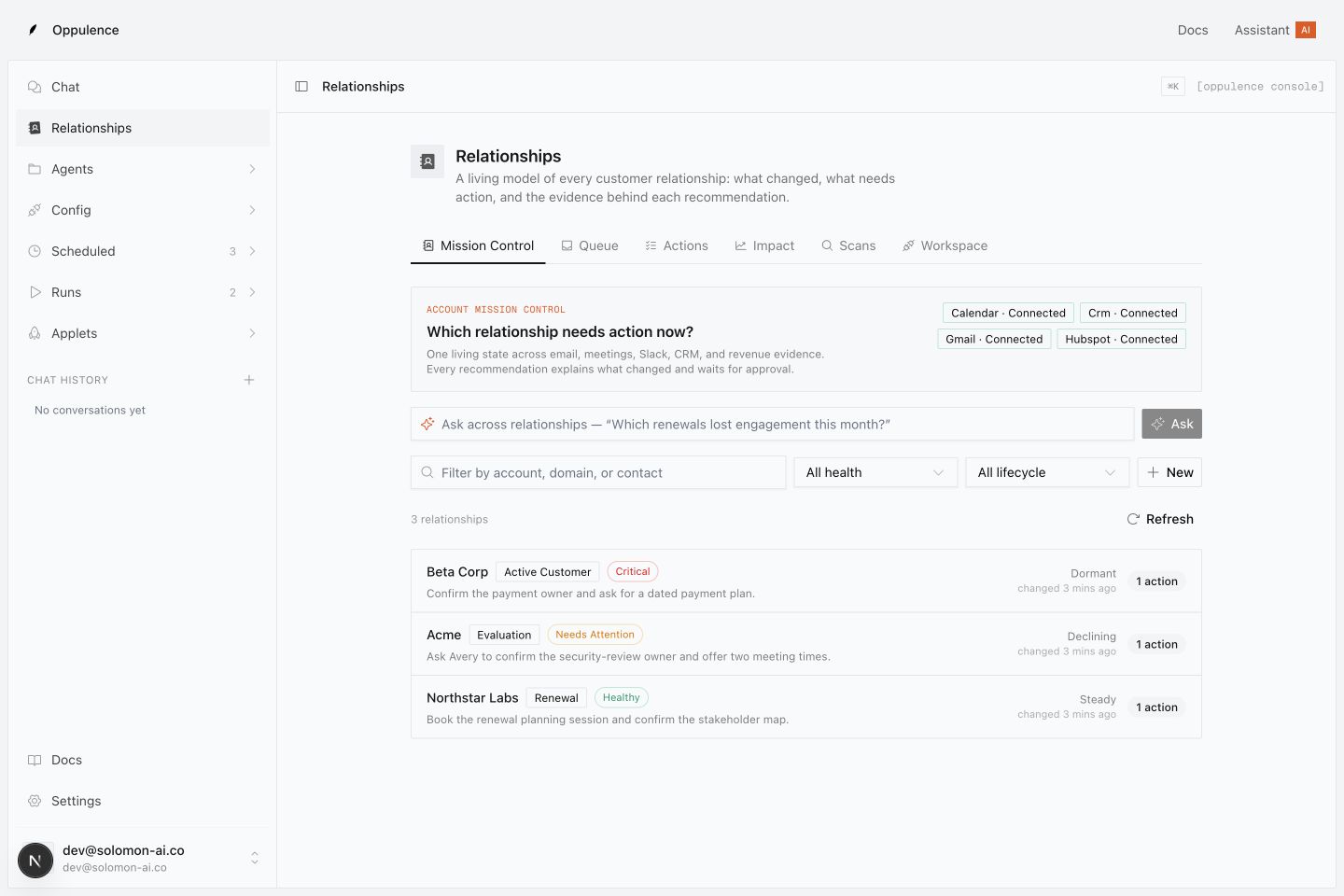
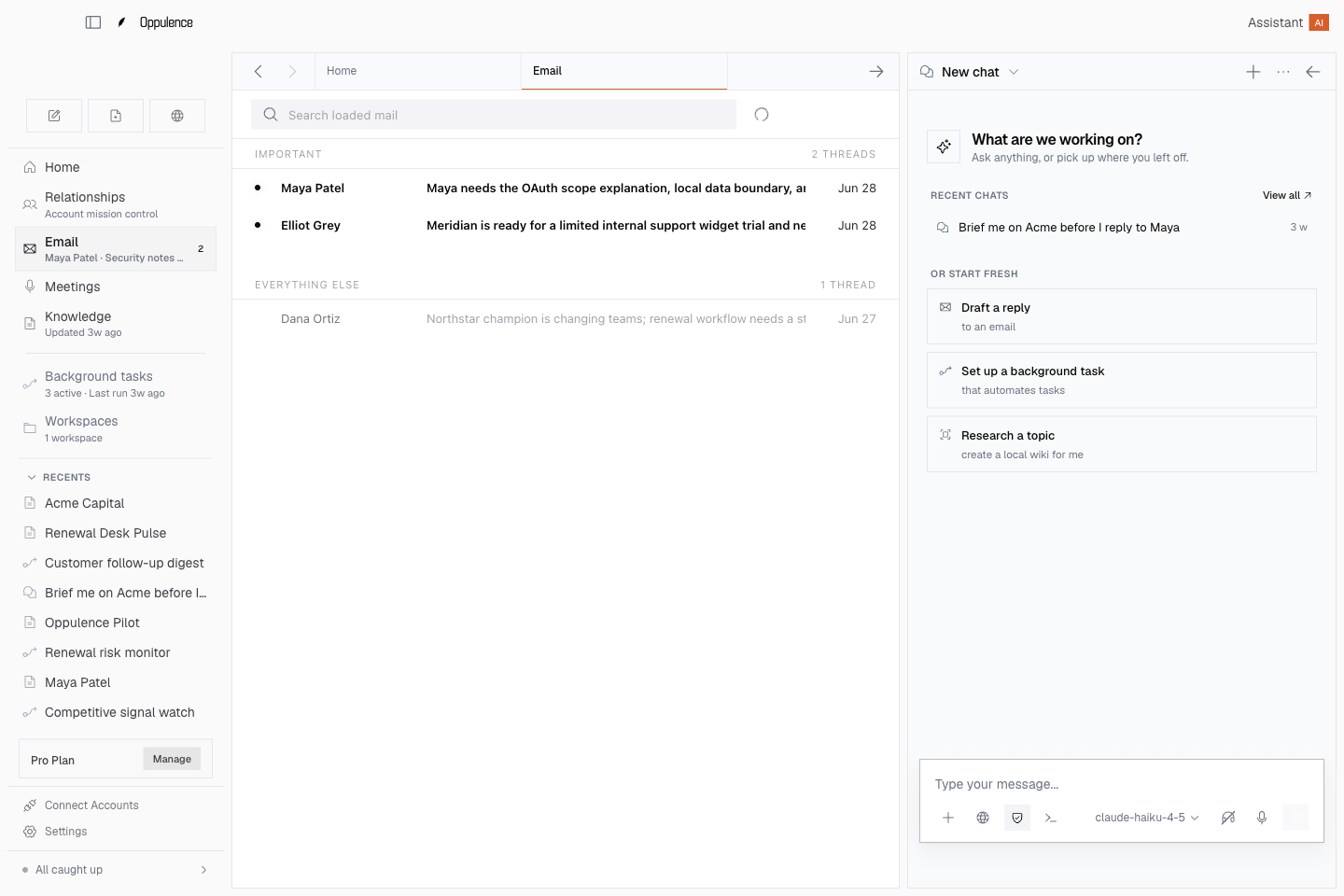
Oppulence is a two-sided register of business promises. It reads Gmail, Slack, calls, and HubSpot, lists the sentences that look like commitments, and waits for you to confirm them. External actions are drafted and held for approval before anything sends.
A two-sided register of business promises. Oppulence reads Gmail, Slack, calls, and HubSpot, lists the sentences that look like commitments, and waits for you to confirm them.
Oppulence is not a CRM, and it is not your inbox. The object is a two-sided commitment record with the source still attached.
Promises are made in mail and meetings. They are kept by someone else. They are only noticed when they break. Oppulence is the independent record of those sentences, with the evidence still attached.
Pipeline, stages, notes
HubSpot remembers the deal. It does not remember the sentence you said on the call.
Threads, not a register
Gmail and Slack are where the promise was made. They are a bad system of record.
Promises, dates, evidence
A two-sided list of what you owe and what they owe, each row tied to a source. That is Oppulence.
Detect sentences that look like commitments, keep the ones that count, and hold every external action until a person says go.
Read mail and meetings. List sentences that look like promises, each with a source link.
Draft the follow-up. Nothing sends until a person approves it.
Gmail, Slack, and HubSpot writes are drafted and held for a person.
Each commitment links back to the email, meeting, or CRM record that created it.
Meeting audio, vault notes, and on-device transcription can stay on the desktop.
Relationship state syncs between web and desktop when you sign in.
Use your model provider keys where the desktop stack supports it.
The desktop coworker stack runs on your machine today; backend deployment is documented for teams who need it.
Oppulence is built for teams who want a register with sources, approval on external writes, and clear docs about what stays local.
Security overviewThese are the questions that stop a careful team. The answers are the product constraints, not slogans.
A two-sided register of commitments: what your team promised and what the other side promised, each tied to the email, meeting, or CRM record it came from. It is not a second CRM and it is not a pile of transcripts.